
Creating tasks
To create a new task, go to Learning - Learning Management - Tasks menu, click the Add button, and select the task type:
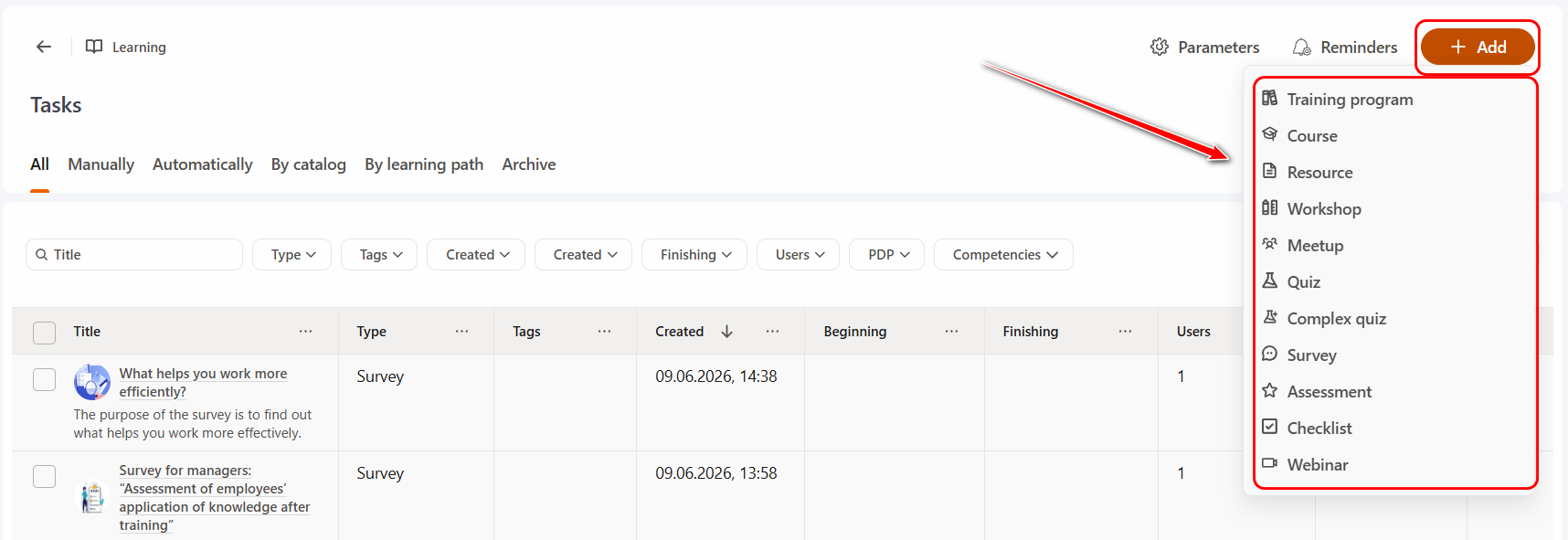
On the Task page, the following fields and blocks are available for completion and configuration:
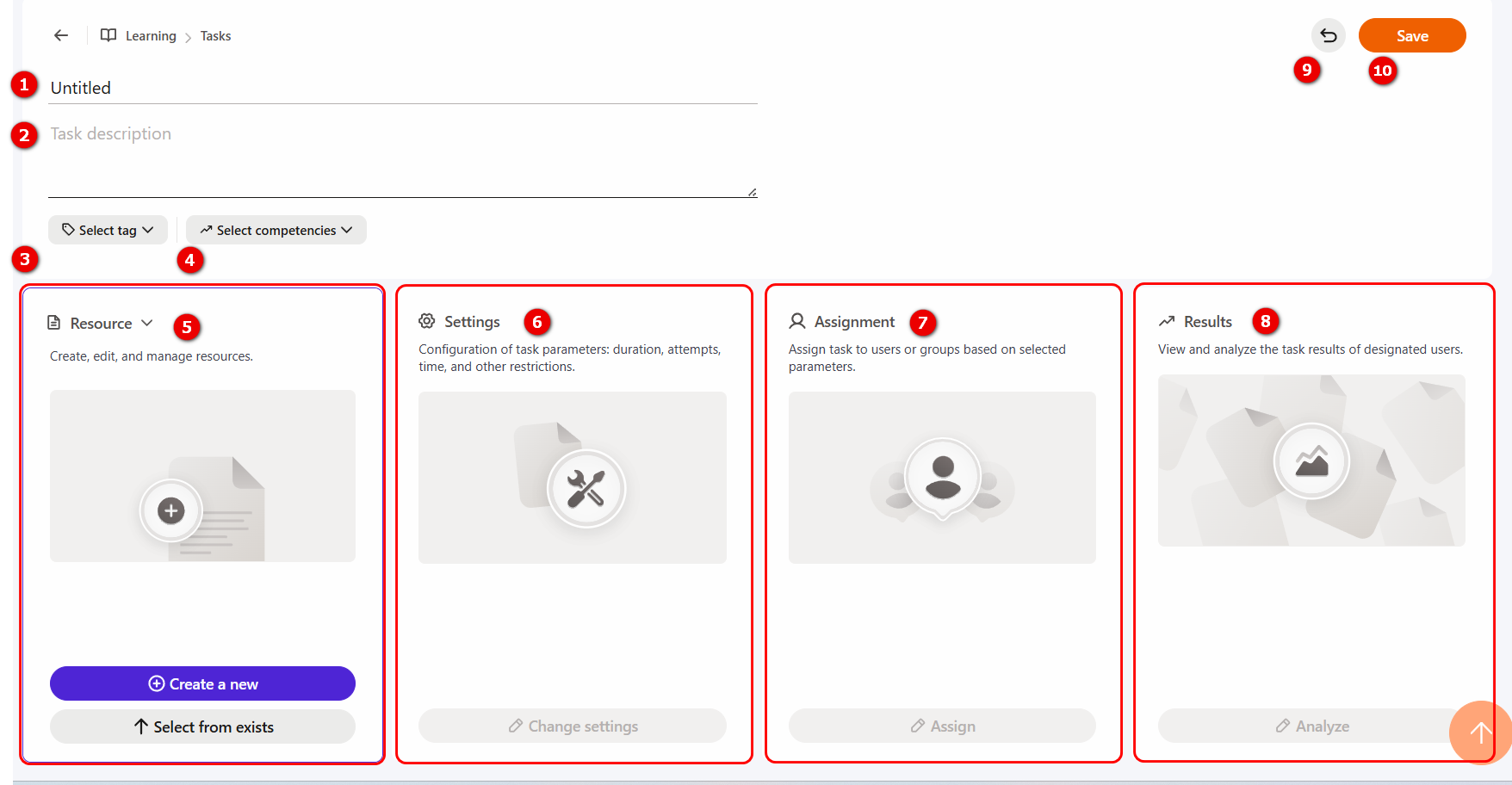
(1) - Task title – a required field;
(2) - Task description – brief information for the user about the task, which is displayed in the task table, on the task card in the My Tasks list and the Catalog of tasks;
(3) - Select tag – optionally assign a tag to the task. You can select a tag from the existing ones in the drop-down list, search for it, or create a new one. More details: Tag Management;
(4) - Select competencies – optionally specify the competencies that the task helps develop. More details: Competencies for the tasks.
Below on the page Blocks corresponding to the task configuration stages are displayed:
- Task Type (5),
- Settings (6),
- Assignment (7),
- Results (8).
(9) - Cancel – cancels changes that have not yet been saved. After clicking the "Save" button, it is not possible to cancel changes using this button;
(10) - Save – save the created task.
Task Type block
In the Task Type block, you need to select a learning item from the existing content or create a new one.
When you click the Create a new button, the page for creating the corresponding learning item opens (for more detail: Content section ). After creation and saving, the learning item is automatically published and added to the Task Type block.
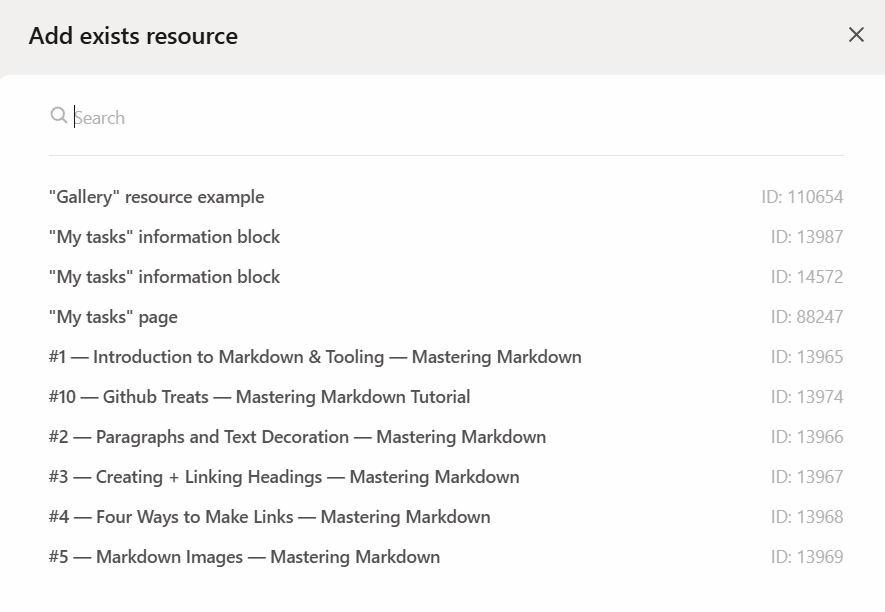
When you click the Select from exists button, a modal window opens where you can find and select the required learning item using the name search.
After selecting a learning item (3), its name and description are automatically displayed in the Task title (1) and Task Description (2) fields. If necessary, the task name and description can be edited.
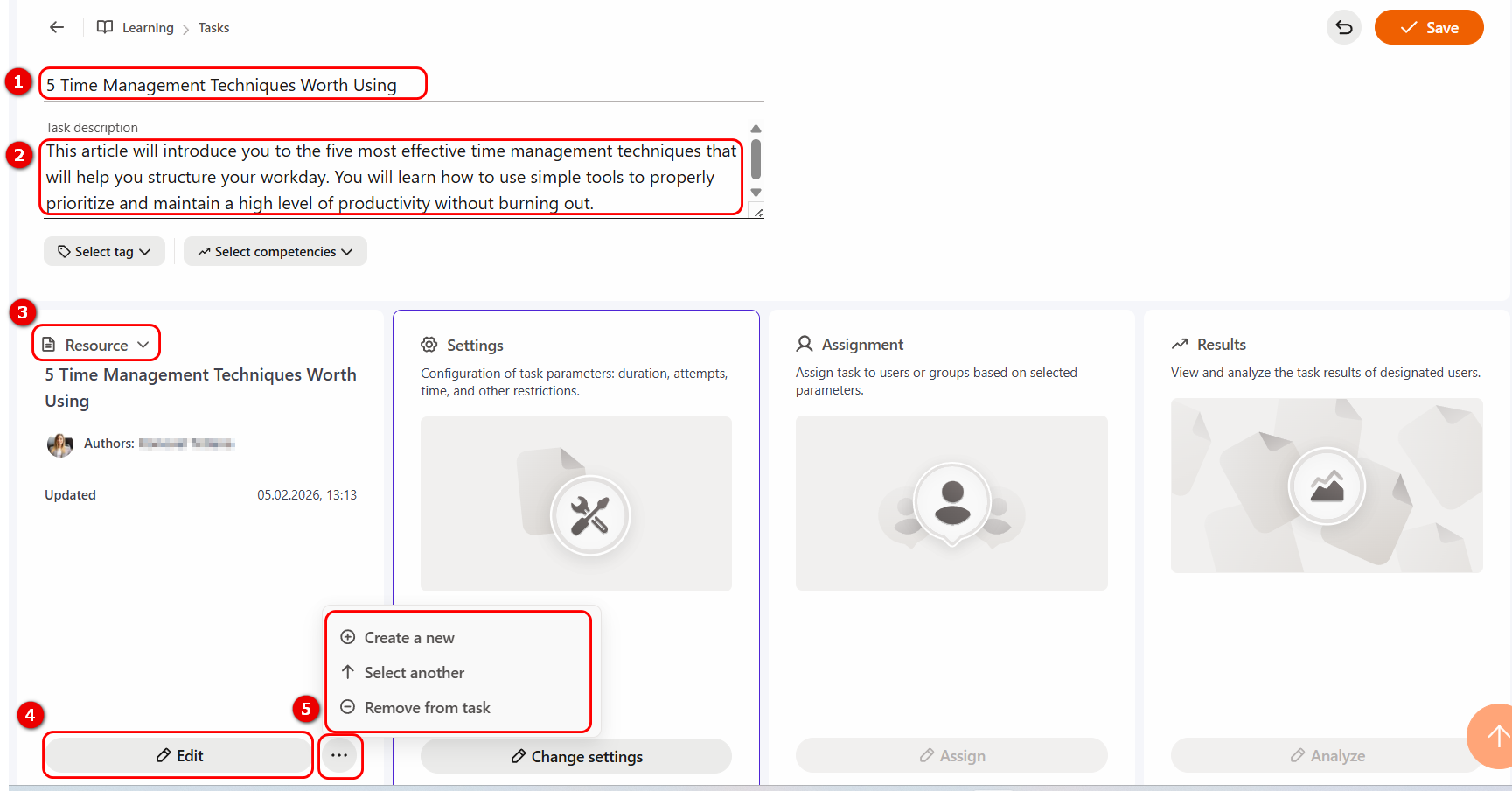
(4) - Edit button – opens the page for editing the corresponding learning item.
(5) - Actions button – the following actions are available for the learning item:
- Create a new;
- Select another;
- Remove from task.
After selecting a learning item, the system prompts you to proceed to the Settings block, while the Task Type block remains available for editing.
Settings Block
Clicking the Change Settings button opens a menu with the task configuration options. Each task type has specialized settings, which are described in detail in the corresponding articles on creating a task with the selected learning item type:
- Training program - involves completing resources, courses, surveys, etc., that have been created and added to the learning program. More details - Creating tasks-Training programs
- Course - involves completing resources included in the course plan and achieving the threshold required for successful completion. More details - Creating tasks-courses
- Resouse - involves viewing learning materials (books, articles, SCORM packages, audio files, documents, etc.) and confirming their study. More details - Creating tasks-resources
- Workshop - involves completing a practical assignment from the curator or tutor. More details - Creating tasks-workshops
- Meetup - involves attending a live event followed by self-assessment or evaluation by the curator - Creating tasks-meetups.
- Quiz - involves completing a user assessment test. More details -Creating tasks-quizzes
- Complex quiz - final quizzing on all topics - Creating tasks-complex quizzes
- Survey - involves collecting feedback from users. More details - Creating tasks-surveys
- Assessment – involves conducting a survey/evaluation using 360°, 180°, or 90° methodology. More details - Creating and editing an assessment task
- Checklist - involves conducting an evaluation based on specified criteria. More details - Creating task-checklists
- Webinar - involves conducting and participating in webinars. More details - Creating tasks-webinars
User Assignment Block
This block is used to assign users to a task. Detailed information is provided in the article User assigning
Results Block
This block allows you to view and analyze the task completion results in detail.
Clicking the Analyze button provides quick access to the reporting page for the corresponding task. More details about reports for each task type can be found in the Learning Reports section.